

Centrex Is Sunsetting. The Real Opportunity Is What Comes Next.
For many organizations, Centrex sunsetting has moved from something they’ve heard about to something they now need to plan for.
Timelines are becoming clearer. In some cases, they’re approaching quickly. What’s encouraging is how many leaders are using this moment not just to replace legacy systems, but to take a broader look at how communications support their operations, their customers, and their long-term strategy. 
Looking Beyond the Technology
Across many industries, organizations are beginning to navigate the transition away from Centrex, POTS, and other legacy on-premise phone systems.
In some cases, that transition is happening quickly. In others, it’s unfolding over time. Either way, it’s prompting a broader conversation—one that extends well beyond voice. This moment is creating space for something valuable: a more complete view of how communications support the business.
A Natural Point to Reevaluate Processes
Technology transitions tend to expose how work actually gets done.
In many environments, processes have evolved around the constraints of older systems: manual steps, disconnected tools, and limited visibility.
As organizations move toward modern platforms, there is a natural opportunity to:
- Save money
- Simplify workflows
- Improve coordination across teams
- Introduce automation where it adds value
- Explore how AI can support faster, more informed decisions
These changes don’t require a complete reinvention. They often come from small, thoughtful improvements made possible by better-connected systems.
The Role of Visibility
One of the most consistent themes we see is the importance of visibility.
Before making changes, organizations benefit from understanding:
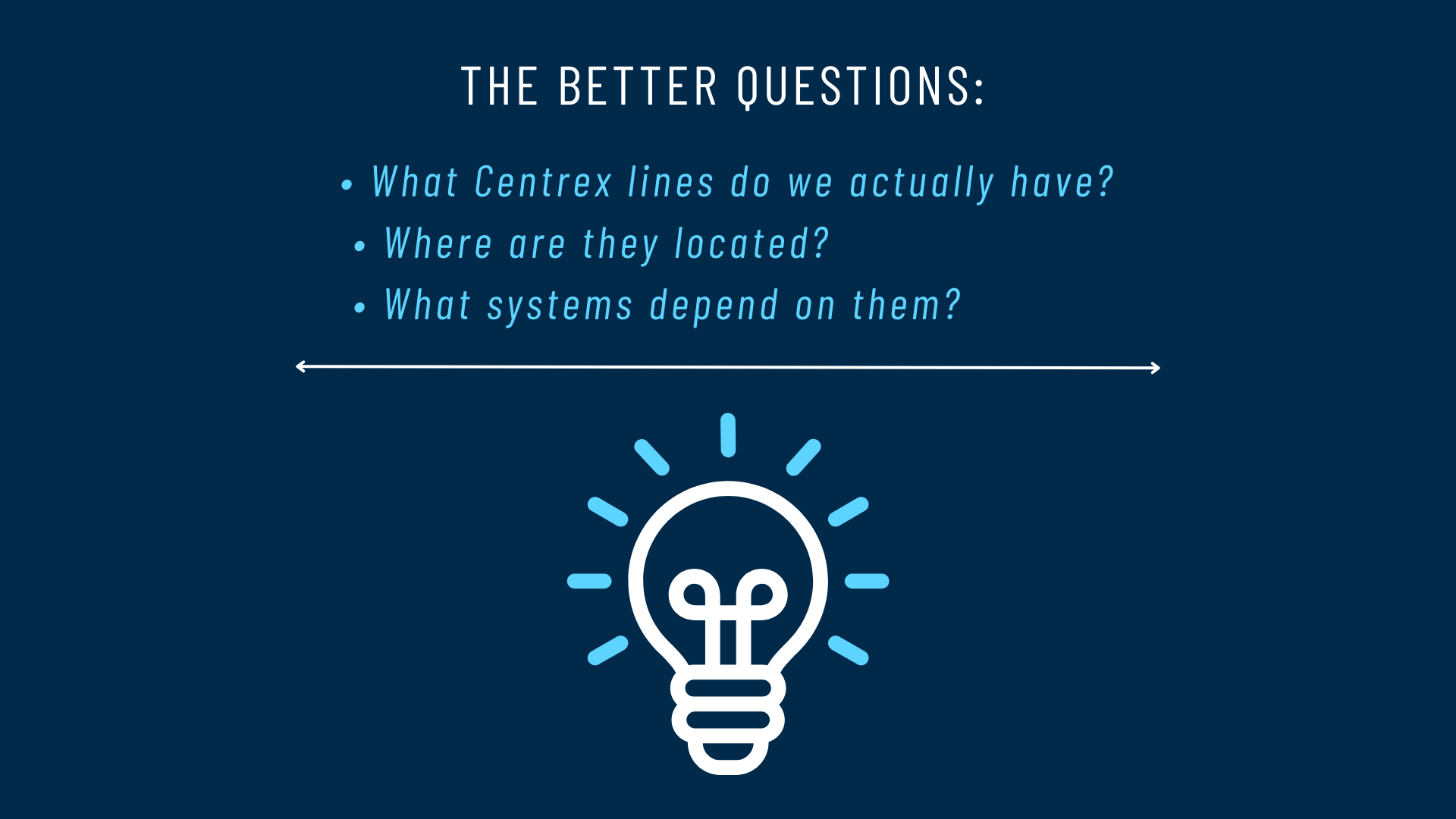
- What is currently active
- What systems depend on it
- Where costs are accumulating
- What is truly critical to operations
In complex environments, that clarity is not always readily available. Yet it is foundational.
As highlighted in industry guidance, visibility across systems and assets underpins both operational resilience and effective decision-making. When that visibility is in place, modernization becomes more deliberate and far easier to manage.
Where Value Begins to Emerge
There is also a practical side to this transition.
Organizations often uncover opportunities to:
- Eliminate unused or redundant services
- Reduce ongoing carrier and maintenance costs
- Simplify vendor relationships
At the same time, modern communication environments can improve how organizations engage externally.
For example, moving away from capacity-limited systems can help ensure that customer calls are consistently handled, rather than missed or worse - they hear busy signals! Over time, that can have a meaningful impact on both service quality and revenue capture.
These outcomes are not the result of a single change, but of a more connected and responsive communications environment.

Connecting Communications to the Broader Environment
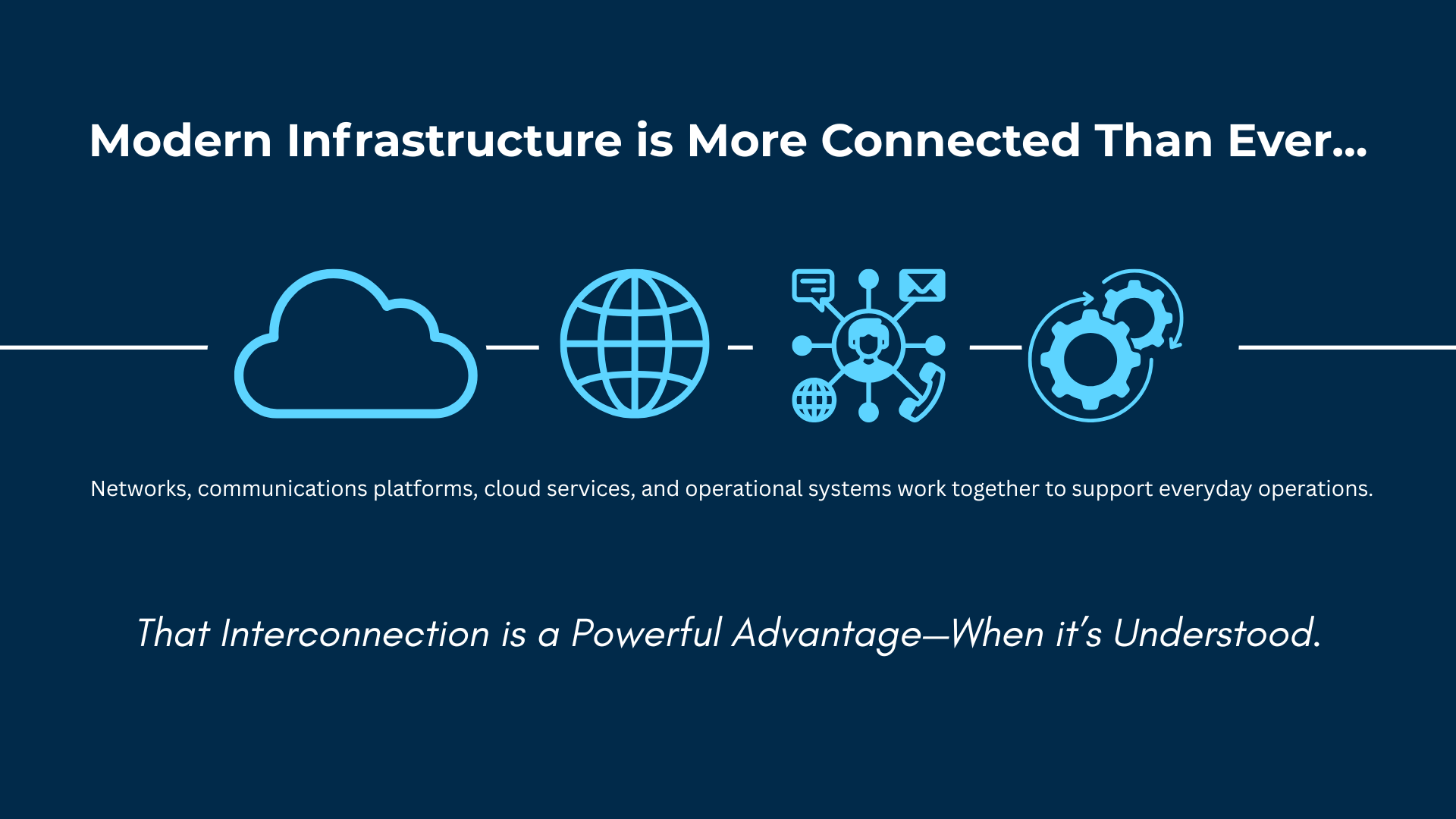
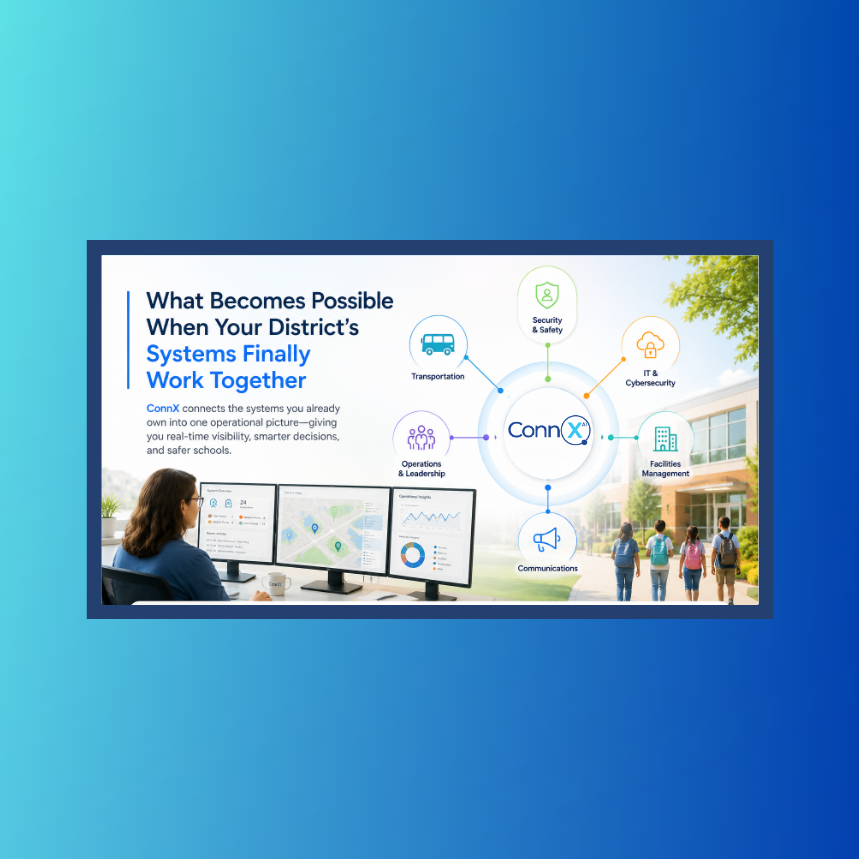
What’s becoming clear is that communications are no longer a standalone layer.
They are increasingly connected to:
- Operational systems
- Safety and compliance environments
- Customer experience platforms
- Data and analytics tools
When these elements are brought together, organizations gain a more complete, real-time understanding of what’s happening across their environment, and the ability to respond accordingly.

Starting with a Clear Baseline
For many organizations, the most effective starting point is simply establishing clarity.
That includes:
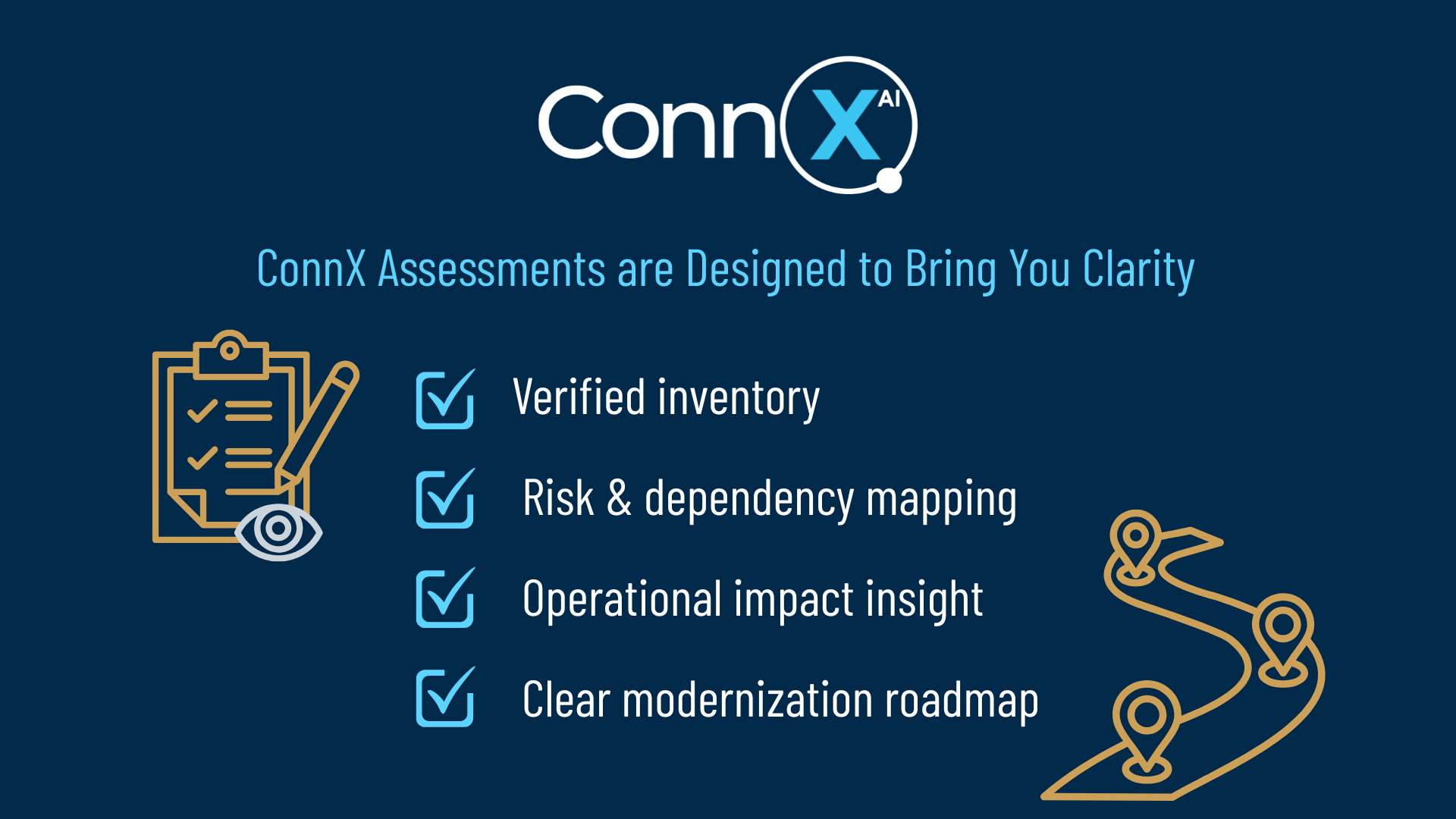
- A verified inventory of lines and systems
- An understanding of dependencies
- Insight into cost and usage
- A roadmap for transition
With that foundation, decisions become more straightforward, and the path forward becomes easier to navigate.
Turning Clarity into a Plan
Once that baseline is established, the conversation becomes more actionable.
Establishing a clear baseline is an important first step—but turning that insight into a plan requires structure.
That’s why many teams begin with a formal assessment of their current environment.
A well-structured assessment helps to:
-
Validate what is active and in use
-
Identify dependencies across systems and locations
-
Surface areas of cost exposure or redundancy
-
Prioritize what should be addressed first
Just as importantly, it creates a shared understanding across IT, operations, and leadership so decisions can be made with confidence.
At ConnX, we’ve seen that when organizations take this step early, the transition away from legacy systems becomes more planned, coordinated, and cost-effective.
A Thought to Leave With
Transitions like this are rarely just about the technology itself.
They tend to open the door to broader improvements—how systems connect, how teams operate, and how decisions are made.
Centrex sunsetting is one of those moments.
For organizations that take the time to assess their environment and plan thoughtfully, it becomes a practical opportunity to align communications more closely with the needs of the business today, and where it’s going next.
___________________________________________________________________________________________________________________________________

For those beginning this process, starting with a structured assessment can provide a clear and manageable path forward:
Business Needs – Legacy Voice Modernization - ConnX
Explore our ConnX Assessments and get started today on the path to clarity!

.png)